
Different ready dates
Factories finish on different days and may miss the intended consolidation cutoff.
Receive supplier cargo in China, verify what physically arrived, prepare it for export and release it into one coordinated international freight plan.
For importers buying from one or several Chinese suppliers, the warehouse is more than a storage address. It is the control point where carton counts, dimensions, weight, packing condition, labels and supplier readiness can be reconciled before the international shipment is finalized.
The warehouse converts separate supplier handoffs into verified shipment data before international dispatch.
A China origin warehouse gives the importer one controlled receiving point between the suppliers and the international shipment.
Cargo can be received against an expected inbound reference, counted, weighed, measured and reviewed for visible outer-packing issues. Approved labeling, repacking, palletizing or consolidation can then be coordinated before the cargo is released into the selected freight service.
The objective is not to store cargo indefinitely. The objective is to turn supplier deliveries into verified, export-ready shipment data and a clearer handoff to international transport.
The warehouse creates a controlled point for exceptions before the international leg begins.
Factories finish on different days and may miss the intended consolidation cutoff.
Final packing can change carton count, dimensions, weight and freight cost.
Supplier carton marks may not match the final routing or receiving requirements.
Weak or damaged outer cartons may need attention before long-distance transport.
Keep the operating scope practical and shipment-specific.
The receiving record should make the next freight decision easier: what was expected, what physically arrived and what action is required.
Example interface only. Actual receiving fields depend on the agreed operating scope.
Consolidate only when the cargo, timing and commercial plan make it practical.
Approved shipping marks, carton relabeling, outer-carton replacement, palletizing, protective packing and shipment staging can be coordinated before release where they are part of the agreed scope.
These are shipment-preparation operations. They are not product manufacturing, laboratory testing, certification or a full product-quality inspection unless a separate service has been expressly specified and agreed.
Where OEM, ODM or private-label buyers need supplier-identifying material controlled before export, these preparation steps can be combined into an agreed confidentiality workflow: Confidential Blind Shipping from China.
Use real operational images as proof — not as decorative filler.
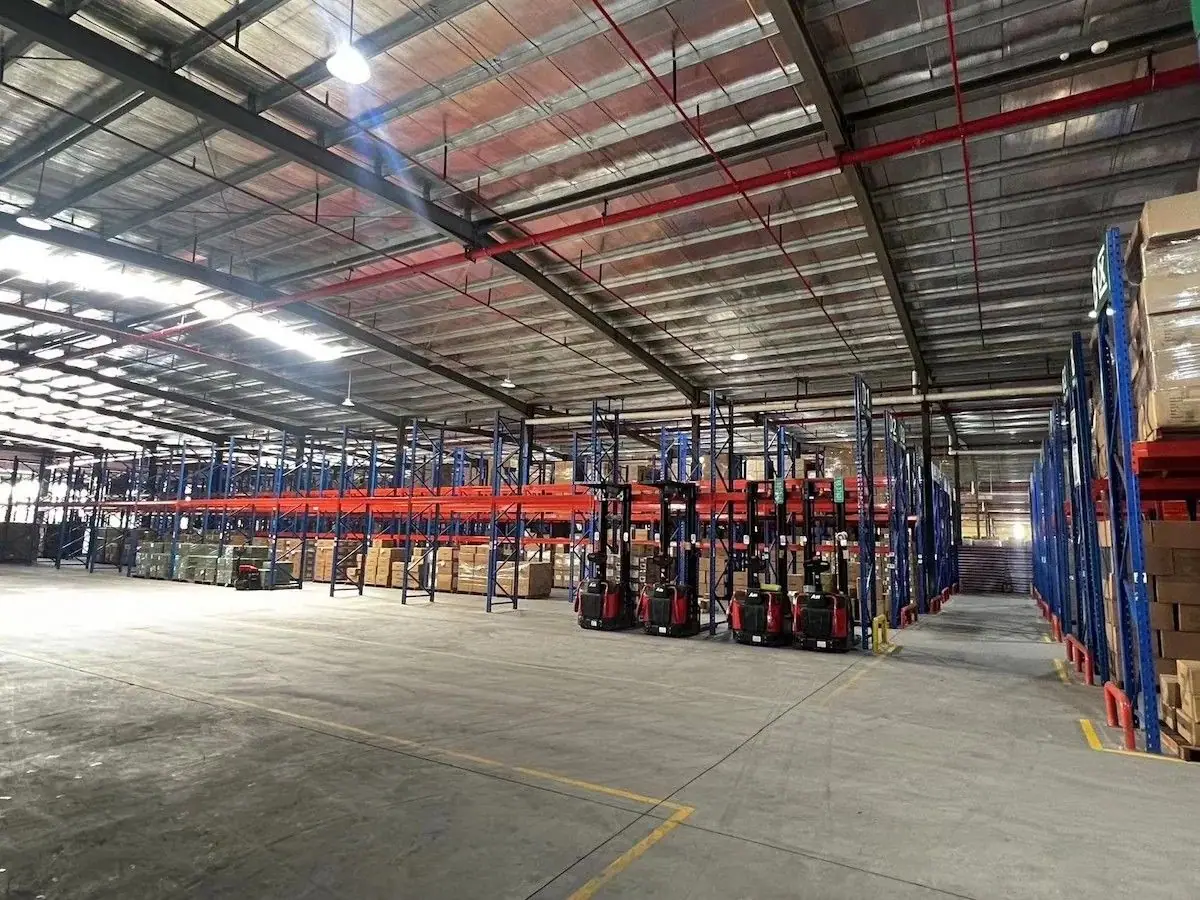
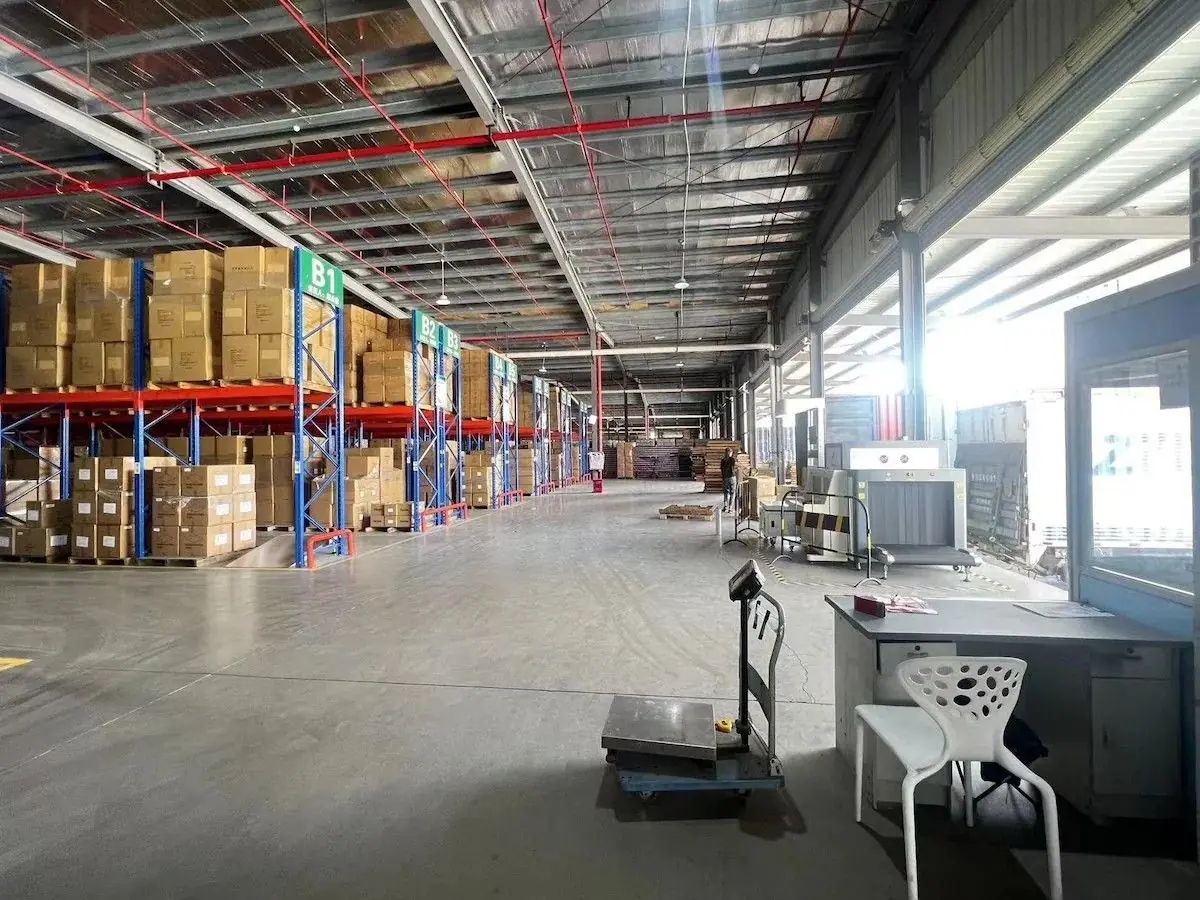
Temporary storage is often necessary while suppliers finish production, but the commercial rules should be agreed before receiving starts.
Define the first inbound date, latest supplier cutoff, storage terms, what happens if one supplier is late, whether partial release is allowed, who approves repacking and the final outbound booking cutoff.
Large panels, machinery, crates, long pieces and other non-standard cargo may require a different receiving, lifting, storage and loading plan.
Provide dimensions and gross weight per piece, packing type, lifting requirements, stackability, useful photographs or drawings and the intended outbound mode before dispatch.
One origin warehouse can feed several international transport options. Cargo released for a U.S. destination continues into China to USA warehouse and FBA delivery planning, where the published references and destination groups set the delivery scope.
Five stages are enough to explain the operating flow.
Set customer reference, supplier list, expected cargo and target outbound plan.
Match delivered cartons or pallets to the expected supplier and shipment record.
Record the agreed physical cargo data and identify receiving exceptions.
Complete approved labeling, repacking, palletizing, consolidation or split preparation.
Dispatch verified cargo into the approved international freight workflow.
Before the first supplier ships or delivers, provide the information below so cargo can be identified and reconciled on arrival.
Clear boundaries for receiving, preparation, storage and export release.
Yes. Separate supplier deliveries can be received under one importer or shipment plan before export.
Yes. The agreed scope can include carton count, gross weight and dimensions so freight planning can use actual physical cargo data.
Basic agreed photo or visible-condition checks can be supported. Full quality-control inspection, testing or certification must be separately specified.
Yes, where labels, packing instructions, materials and commercial scope are agreed before the work is performed.
Yes. Compatible supplier cargo can be prepared and consolidated before release into the selected international freight plan.
Storage terms should be confirmed for the shipment. A universal free-storage period should not be assumed.
Potentially. Dimensions, piece weights, packing, lifting method, access and outbound transport plan should be reviewed before arrival.
This service primarily covers China-origin receiving, preparation and export staging. Ongoing B2C fulfillment or returns should only be offered under a separate operational scope.
Send your supplier list, expected cartons or pallets, commodity, cargo-ready dates and destination. Structure the receiving plan before the first cargo arrives.