
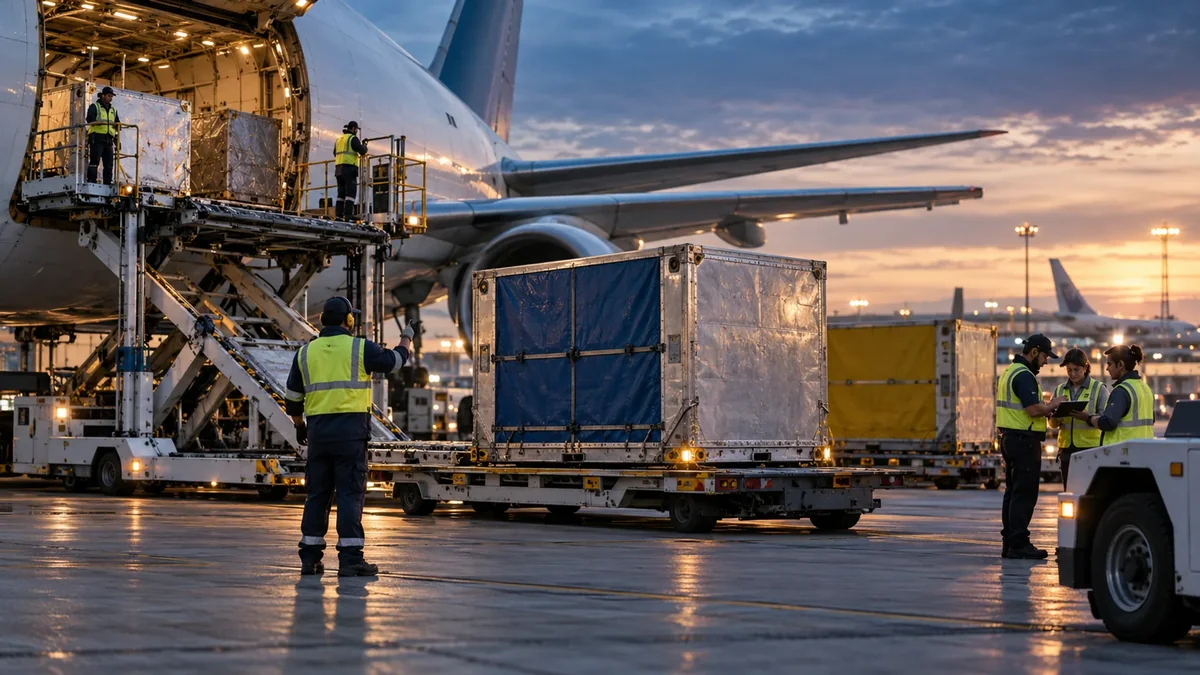
Offload and rollover occur when cargo does not travel on the originally expected flight or connection. The key buyer question is whether the carrier has confirmed an alternative uplift and how that revision changes onward delivery.
Illustrative planning case, not a booked DDP Atlas shipment. A containerized cargo lot is accepted at origin but does not make the expected flight. The importer needs an explicit rebooking status and revised arrival plan—not simply reassurance that the consignment is “at the airport.”
Trigger data for offload and rollover risk
| Priority | Evidence or input |
|---|---|
| 1 | Acceptance timestamp |
| 2 | Original versus revised flight |
| 3 | Rollover reason |
| 4 | Confirmed replacement booking |
| 5 | Connection/release implications |
| 6 | Delivery impact |
How to plan offload and rollover
For air freight offload rollover, exception control begins before departure. Mark the milestones that can fail—cargo readiness, warehouse receiving, acceptance, cut-off, uplift, connection, customs and delivery—and define the recovery owner for each one.
Recovery authority
Pre-agree who can approve the next flight or alternate gateway when an offload happens.
For air freight offload rollover, exception control begins before departure. Mark the milestones that can fail—cargo readiness, warehouse receiving, acceptance, cut-off, uplift, connection, customs and delivery—and define the recovery owner for each one.
Critical cargo should have a decision threshold. For example, if the planned uplift is lost, should the forwarder protect the next flight, switch gateways, split the shipment or request a premium alternative? Deciding this only after a disruption wastes the small amount of time that air freight was purchased to save.
Illustrative planning case, not a booked DDP Atlas shipment. A containerized cargo lot is accepted at origin but does not make the expected flight. The importer needs an explicit rebooking status and revised arrival plan—not simply reassurance that the consignment is “at the airport.”
Key takeaways
- A confirmed booking can still face operational disruption when aircraft capacity, weight and balance, connection performance or priority decisions change.
- Cargo with flexible routings or earlier acceptance may have more recovery options than freight tendered at the last possible cut-off.
- Importers should ask how the forwarder escalates offloads and whether the next viable uplift is automatically protected.
- Build a contingency path before a deadline becomes critical.
- Track cargo-ready, acceptance and uplift milestones separately.
The decision in one table
| Decision point | What to check |
|---|---|
| Early warning | Track cargo-ready, warehouse receipt, acceptance, uplift, clearance and delivery separately. |
| Recovery | Pre-agree alternate flight/gateway or split-shipment options for critical cargo. |
| Destination control | Prepare broker, consignee and delivery details before arrival. |
| Cost exposure | Know potential storage, rehandling, rerouting and premium-recovery charges. |
Information to send for offload and rollover risk
- Required delivery date and inventory consequence of delay.
- Latest safe cargo-ready date.
- Primary and alternate gateway/routing options.
- Escalation contact for supplier, forwarder, broker and consignee.
- Storage/free-time assumptions at destination.
- Decision rules for reroute, split shipment or premium recovery.
Planning example: offload and rollover risk
A booked shipment is offloaded. The forwarder immediately presents the next protected uplift and an alternate gateway option with cost/time differences. The buyer can decide quickly because escalation authority was agreed before departure.
Frequently asked questions
Can confirmed air cargo still be offloaded?
Operational disruption can still occur. Capacity, weight and balance, connection performance and other operational decisions may change after booking.
What is the best way to avoid airport storage?
Have broker, consignee, documents, payment authority and delivery instructions ready before arrival, and monitor the clearance/recovery milestones closely.
How should importers plan peak season?
Confirm cargo-ready data earlier, keep rate validity and capacity visible, protect cut-offs and pre-agree alternate gateways or recovery options.
Before you book air freight offload rollover: Decide in advance who owns the exception and what the fallback is, rather than negotiating it after the shipment is already moving. The shared operating sequence and pre-booking checklist live on the Air Freight from China hub.
Where offload and rollover risk goes wrong
Where importers lose time or money. Risk 1: Booking is treated as guaranteed uplift when operational capacity later changes. Risk 2: Delay is discovered after the last practical recovery option has passed. Risk 3: Destination storage begins while broker or consignee is unprepared. Risk 4: Peak-season pricing or route changes are approved without checking total delivery impact.
Buyer control matrix.
Why confirmed cargo does not always board
A booking confirmation allocates space. It does not make the consignment immune to being left behind, and understanding the mechanism is what allows a buyer to reduce the exposure.
| Mechanism | What is happening |
|---|---|
| Weight and balance limits | The aircraft has a payload limit. When the total offered exceeds it, something has to come off. |
| Late arrival at the terminal | Cargo that misses the handling window cannot be loaded even if space was allocated to it. |
| Substitution for higher-yield cargo | Where capacity is scarce, consignments that are less valuable to the operator are the ones at risk. |
| Aircraft change | A smaller or differently configured aircraft reduces the space available for a given build. |
| Transfer misconnection | On a connecting routing, a late inbound flight breaks the onward connection. |
Reducing exposure is mostly about making the consignment easy to carry and expensive to leave behind: present it inside the handling window with clean documentation, use a service level with an explicit boarding priority where the deadline justifies it, avoid tight transfer connections on urgent cargo, and keep a written note of what the fallback is if the consignment rolls.
The uncomfortable part is that a rolling shipment usually cannot be recovered by complaining. The recovery is the next flight, and the only way to make the next flight usable is to have planned for it — which means deciding in advance which shipments have a genuine fallback and which do not.
Related guides
Airline Offload and Rollover in Air Freight: What Importers Need to Know continues the Air Freight from China hub.
- China Air Freight Risks: Peak Season Capacity Delays & Storage
- Air Freight Delays from China: Causes Prevention and Recovery
- Air Cargo Storage Charges at Airports: How Importers Can Avoid Them
- Air Freight Peak Season from China: Capacity Rates and Booking Strategy
Guides that continue from Airline Offload and Rollover in Air Freight: What Importers Need to Know:
- China Air Freight Risks: Peak Season Capacity Delays & Storage
- Air Freight Delays from China: Causes Prevention and Recovery
- Air Cargo Storage Charges at Airports: How Importers Can Avoid Them
- Air Freight Peak Season from China: Capacity Rates and Booking Strategy
- Air Freight from China hub
- Standard air-freight operating checklist
Operational verification: airline acceptance, dangerous-goods rules, battery requirements, customs procedures, schedules, capacity and charges can change. Confirm current requirements for the actual cargo, carrier, route and booking date.
Related air-freight guidance.
Use these links to move up the cluster or compare the most relevant sibling decision.