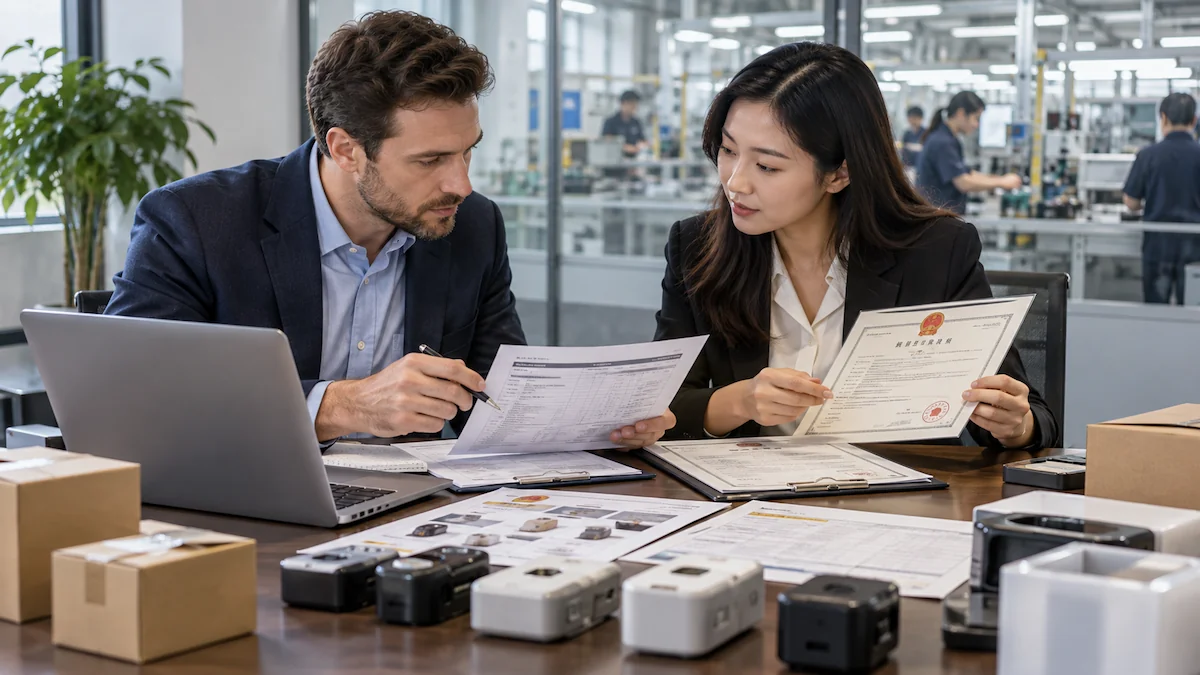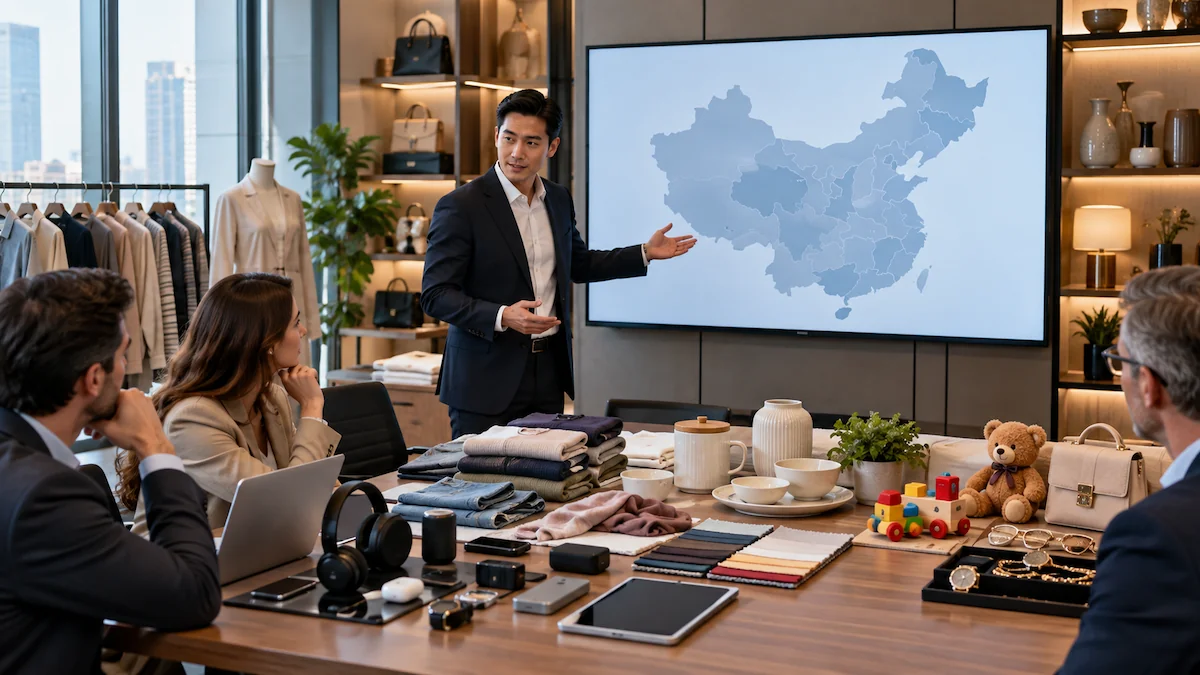
China is not one manufacturing market.
Its supply chains are organized into regional and product-specific clusters. Electronics buyers may spend most of their time in the Pearl River Delta. Small-commodity buyers may focus on Yiwu and Zhejiang. Furniture sourcing often points to Guangdong production zones. Textile buyers may work through Zhejiang, Jiangsu and other specialized regions.
This clustering matters because a strong supplier is often surrounded by:
- component vendors;
- material markets;
- tooling shops;
- packaging suppliers;
- specialist subcontractors;
- testing and logistics services;
- experienced labor.
The “best city” is therefore not a universal ranking. It is the location or cluster that gives a buyer the strongest combination of product capability, supplier choice, total cost, quality control and logistics.
Quick sourcing-city matrix
|
Product category |
Common sourcing hubs/clusters to investigate |
|---|---|
|
--- |
--- |
|
Electronics & accessories |
Shenzhen, Dongguan and wider Guangdong |
|
Apparel & fashion |
Guangzhou and wider Guangdong; Zhejiang/Jiangsu clusters by product |
|
Small commodities & gifts |
Yiwu and Zhejiang |
|
Furniture |
Foshan and wider Guangdong |
|
Lighting |
Zhongshan and nearby Guangdong clusters |
|
Hardware |
Guangdong and Zhejiang industrial clusters |
|
Textiles & fabrics |
Shaoxing/Keqiao and other Zhejiang/Jiangsu textile regions |
|
Bags & leather goods |
Guangzhou-area and other specialist clusters |
|
Home goods |
Zhejiang, Guangdong and category-specific clusters |
|
Toys |
Shantou/Chenghai and other toy-production areas |
|
Packaging |
Guangdong, Zhejiang, Jiangsu and local supplier ecosystems |
|
Auto parts |
Guangzhou/Foshan and other specialized regional clusters |
This is a sourcing map, not an exhaustive list. Many excellent manufacturers operate outside the best-known clusters.
Shenzhen and the wider Pearl River Delta: electronics and product development
Shenzhen is a major sourcing base for:
- consumer electronics;
- smart devices;
- accessories;
- LED/electronic systems;
- hardware;
- prototyping;
- components.
Its strength is speed of ecosystem access.
A product may require PCB assembly, injection molding, CNC parts, cables, packaging and firmware support. When those suppliers are within one regional network, engineering changes and pilot runs can move faster.
Buyers should also search Dongguan, Huizhou and other nearby manufacturing cities rather than limiting the search to Shenzhen city.
Guangzhou: fashion, consumer products and commercial sourcing
Guangzhou combines manufacturing access with major wholesale and commercial markets.
Common categories include:
- apparel;
- bags;
- shoes;
- accessories;
- beauty-related products;
- home and consumer products;
- auto-related categories.
For fashion sourcing, use Guangzhou as a gateway into the wider Guangdong network rather than assuming every supplier manufactures within the city.
Foshan: furniture and home-related manufacturing
Foshan and nearby areas are widely associated with:
- furniture;
- building materials;
- ceramics;
- home products;
- metal/home fixtures.
For large or bulky products, sourcing decisions should include packing, container loading and damage prevention from the beginning.
A lower unit price can disappear if the product uses container space inefficiently or requires expensive repacking.
Zhongshan: lighting ecosystems
Zhongshan, especially the Guzhen area, is well known for lighting-related supplier networks.
Buyers should compare:
- electrical component quality;
- certification requirements;
- driver/LED specifications;
- thermal management;
- packaging protection;
- market-specific electrical requirements.
Do not treat visual design as the only purchasing criterion.
Yiwu: small commodities, accessories and broad assortments
Yiwu is useful for:
- gifts;
- promotional products;
- party supplies;
- accessories;
- stationery;
- seasonal products;
- small home items;
- many low-unit-value goods.
It is especially efficient for buyers building a broad SKU assortment.
The logistics challenge is the opposite of large industrial equipment: many suppliers, many cartons, many SKUs and a high need for identification and consolidation.
Shaoxing / Keqiao and textile clusters
For textile and fabric sourcing, specialized clusters can provide:
- large material selection;
- mills;
- dyeing/finishing connections;
- fabric wholesalers;
- testing/supporting services.
Apparel brands sourcing fabric separately from garment production need to coordinate:
- fabric approvals;
- dye lots;
- shrinkage;
- testing;
- delivery from mill/market to garment factory;
- final garment shipment.
This becomes a multi-stage supply chain, not one supplier purchase.
Shantou / Chenghai: toys
Toy sourcing requires careful product and market compliance review.
Beyond supplier capability, buyers may need:
- age grading;
- material safety;
- mechanical/physical testing;
- electrical/battery review;
- labeling;
- destination-specific standards.
Start compliance planning before production, not after the goods are packed.
How to choose a sourcing city
Use five questions.
1. Where are the best process capabilities?
A beautiful showroom does not matter if the critical manufacturing process is weak.
2. Where are the upstream suppliers?
Ask where key materials/components come from.
3. How easy is supplier verification?
Consider factory access, inspection availability and local support.
4. How does the cluster affect MOQ and lead time?
Dense supplier networks can improve flexibility, but not every factory offers low MOQ.
5. What does the location do to logistics?
Include:
- domestic pickup;
- warehouse/consolidation location;
- export port/airport;
- cargo type;
- shipment volume;
- destination.
Do not choose a supplier only because it is in the “right” city
A weak factory in a famous cluster is still a weak factory.
Evaluate:
- company identity;
- relevant product experience;
- sample;
- process control;
- quality system;
- capacity;
- communication;
- payment structure;
- compliance;
- total landed cost.
Location is a filter, not a final decision.
Multi-city sourcing strategy
A multi-city strategy usually starts with the supplier search itself, so pair this with how to find manufacturers in Shenzhen, Guangzhou and Yiwu. Once more than one city is involved, plan how the cargo converges by reviewing China consolidation before the first pickup is booked.
A brand may source:
- electronics in Shenzhen;
- packaging in Dongguan;
- textiles in Zhejiang;
- accessories in Yiwu.
That can be commercially rational.
The question becomes whether to:
- ship each order separately;
- consolidate regionally;
- consolidate everything in one China warehouse;
- use different freight modes by product.
Use volume, readiness dates and destination to decide.
Regional consolidation versus one national consolidation point
Regional consolidation is useful when:
- suppliers are far apart;
- domestic transport would be expensive;
- cargo leaves through different gateways;
- orders finish at different times.
One consolidation point is useful when:
- shipment size is manageable;
- one international departure is efficient;
- buyer needs centralized labeling/repacking;
- one shipment record simplifies destination receiving.
There is no universal answer.
Sourcing-city shortlist workflow
- Define product and process.
- Identify likely industrial clusters.
- Build 10–20 supplier candidates.
- Verify business identity.
- Compare capability.
- Request standardized RFQ.
- Order samples from finalists.
- Audit/visit where justified.
- Calculate total import cost.
- Plan pickup/consolidation before mass production completes.
China sourcing checklist by category
For every category, ask:
- [ ] What process determines product quality?
- [ ] Where does the supplier source its key materials/components?
- [ ] Is the supplier a manufacturer, trader or hybrid?
- [ ] Where is the actual factory?
- [ ] What is the realistic MOQ?
- [ ] What is the production lead time?
- [ ] Which tests/certifications apply?
- [ ] What export packaging is required?
- [ ] What is the final carton size/weight?
- [ ] Which China gateway/warehouse makes sense?
- [ ] Should cargo be consolidated with other suppliers?
Frequently asked questions
What is the best city in China for sourcing?
There is no single best city. Choose based on product category, production process and the surrounding supplier ecosystem.
Is Shenzhen the best place for electronics sourcing?
It is one of the most important electronics sourcing hubs, especially when combined with surrounding Guangdong manufacturing cities.
Is Yiwu best for small orders?
Yiwu can be strong for broad assortments and small commodities, but MOQ and seller terms vary by product.
Where should I source clothing in China?
Guangdong, Zhejiang, Jiangsu and other specialized apparel/textile regions all have strong supply chains. Match the city to garment type, fabric/process and order structure.
Does sourcing near a port reduce freight cost?
It can reduce some domestic logistics, but supplier capability and total landed cost matter more than port distance alone.
Can DDP Atlas collect from different sourcing cities?
Collection and consolidation can be planned from major China manufacturing regions, subject to cargo, pickup locations, timing and the confirmed service scope.
Related guides: how to buy from multiple suppliers in China · how to coordinate multiple China suppliers
Need a China-side freight partner?
A multi-city sourcing strategy works best when procurement and logistics are designed together.
DDP Atlas can coordinate supplier pickup, receiving, measurement, labeling/repacking support, consolidation and international freight from China.
Explore China Consolidation: China consolidation and supplier receiving
Compare Freight Services: compare freight services
Part of the Shipping from China hub — see the wider freight planning map.