Last editorial verification: October 16, 2026. Rules and rates must be checked for the actual shipment date.
For an ecommerce brand, arrival at a US seaport is not the same as inventory becoming sellable in a third-party logistics warehouse. Between the vessel discharge and the warehouse's system receipt sit import clearance, terminal release, chassis/drayage, appointment scheduling, unloading, SKU reconciliation and sometimes palletizing or rework. Each handoff adds a potential charge and a new owner. The best shipping quote therefore ends at a clearly defined receiving event, not the vague promise of “door delivery.” This guide gives Shopify and wholesale importers a practical path from Chinese factory cargo readiness to confirmed US 3PL availability.
Start with the exact receiving dock specification
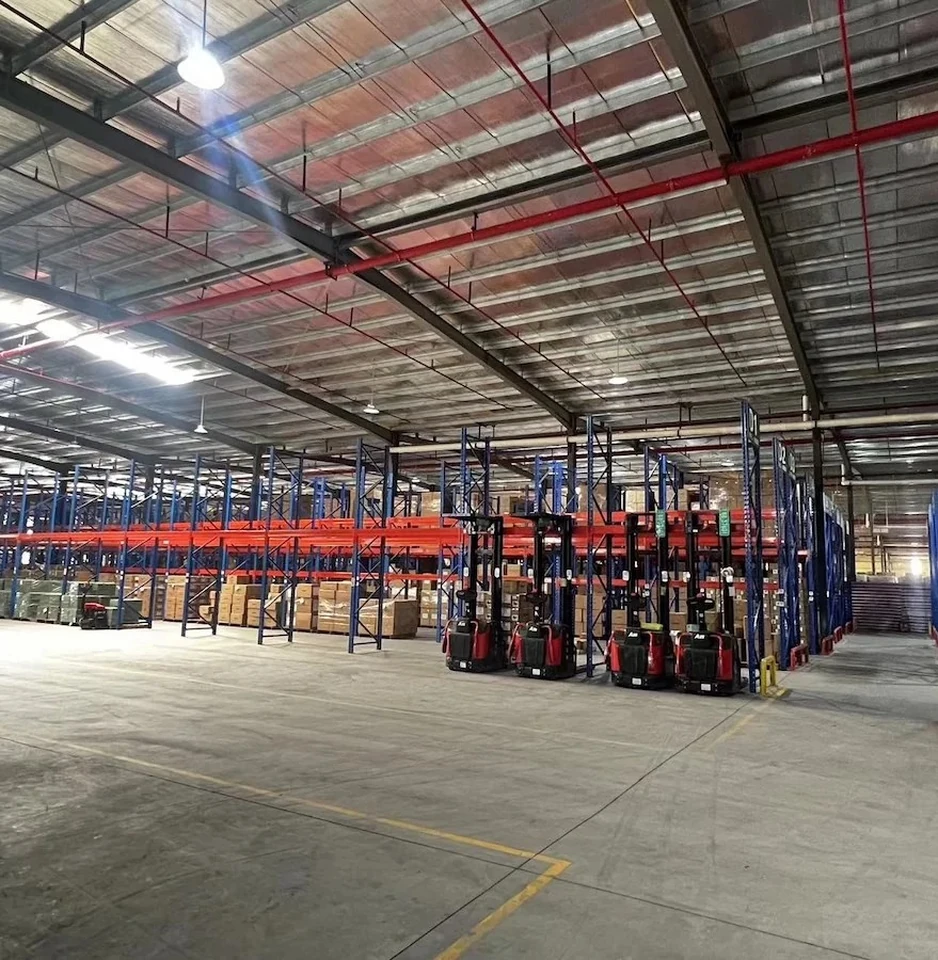
Ask the 3PL for its receiving guide before choosing a Chinese export packing plan. Essential details include address, operating hours, appointment system, pallet dimensions, preferred label format, advance shipping notice requirements, allowed truck type, unloading capability and whether floor-loaded ocean containers are accepted. Some 3PLs prefer cartons on pallets; others can devann floor-loaded goods but charge extra. A quote to a postcode alone cannot tell you whether the driver needs a live unload, drop trailer, liftgate or special appointment. Collect the warehouse's written rules and use them as the final-mile service specification.
Compare service scopes from China to US warehouse
EXW collection, FCA carrier handover, FOB ocean freight and destination delivery represent different scopes, not simply different price levels. For a fair comparison, list Chinese pickup, consolidation, export filing, international freight, US clearance, port charges, drayage, warehouse unloading and receiving against each provider. If goods come from multiple factories, include consolidation warehouse receiving and dispatch. Ocean FCL can reduce handling for larger volumes but may be unsuitable where the 3PL cannot unload containers. LCL consolidates sea freight but may introduce CFS handling and additional inland coordination. The best choice depends on landed unit cost and days until stock is available.
Build one all-in warehouse-ready cost
Use the same cargo quantity, dimensions, entry values and destination warehouse for every quote. Separate freight services from inventory receiving charges so the team can identify which party controls the cost. Model port-based trucking as a range if congestion, chassis use or storage is uncertain, but label it as a planning allowance rather than a published rate. Add customs duty only after HTS and importer review. The operationally useful unit cost is total acquisition and logistics cost divided by actually received saleable units, not units ordered. Loss, damage and rework alter the denominator and can make an apparently cheap ocean quote costly.

Reconcile the final inventory receipt
Once the shipment reaches the receiving dock, request warehouse confirmation of cartons, pallets, SKU quantities and condition. Compare the ASN with the signed delivery document and final WMS receipt. If there are shortages, document which seal, carton IDs and handling event are involved before attributing loss. Use a discrepancy report with timestamped photographs where authorized. A good forwarder can coordinate delivery to the agreed point; the warehouse controls its inventory receiving system. Keep those responsibilities separate so a dispute does not stall the next purchase order.
From factory dock to 3PL receiving: the handoffs that determine cost
An American 3PL usually wants to receive stock in a particular format, not merely see a truck arrive at its address. Collect a warehouse receiving manual before shipment booking: inbound reference or ASN, appointment lead time, carton label schema, acceptable pallet type, pallet height and weight, unloading responsibility, floor-loaded container policy, delivery hours and any detention or waiting charges. Clarify whether the consignee name on the transport document must match the registered warehouse account. A 3PL may accept a pallet delivery but reject an unapproved floor-loaded container because unloading labor was not reserved.
Operational chain: Chinese factory readiness → pickup/consolidation → export paperwork → ocean or air transport → U.S. importer and entry → terminal release → drayage/transload if required → appointment → physical 3PL receipt → SKU-level stock availability. Mark who signs off at every handoff. A carrier proof of delivery only proves a handover at a point in that chain; it does not prove that all SKUs are sellable in the WMS.
Compare FCL direct delivery with CFS/transload before booking
An FCL container can sometimes go directly to a warehouse equipped for container unloading. Other warehouses require a local transload into palletized domestic trucks. LCL may pass through a CFS and incur handling and release steps before final delivery. Ask the provider to quote both transport and destination events. No general statement that “FCL is always cheaper” survives differences in freight volume, location, warehouse capabilities and the container's free time.
| Question | Direct container | Transload / palletized truck |
|---|---|---|
| Can the warehouse unload a container? | Must confirm | Usually not required |
| Who supplies unloading labor? | 3PL or outside team | Transload facility |
| Can the truck meet an appointment? | Depends on chassis and terminal | Depends on domestic linehaul |
| What happens to the empty container? | Return must be planned | Managed at transload site |
| Where are carton counts reconciled? | At warehouse unload | Potentially at two locations |
Worked landed-cost example: separate cash charges from stock readiness
Suppose an importer sends 2,400 units in 120 cartons across 12 SKUs to an American 3PL. This is a hypothetical inventory profile; it is not a customer shipment or a price estimate. Put factory goods cost, China pickup, export handling, sea or air freight, customs entry, duties, terminal handling, transload/drayage, final-mile truck, warehouse receiving and exception reserve into distinct worksheet rows. Calculate total landed cash spend ÷ units actually received and accepted, not just ocean freight ÷ ordered units.
If 2,400 units were ordered but 2,360 were accepted because 40 need investigation, two numbers matter: the initial cost per purchased unit and the provisional cost per immediately available unit. Keep the 40 units in an exception ledger pending reconciliation. Never silently classify a count difference as freight damage without warehouse evidence.
Request a quote the 3PL can actually receive
Send origin city, pickup term, commodity and packed carton dimensions, gross weight, carton and SKU counts, importer identity, destination ZIP code, dock restrictions, appointment policy, target availability date, and whether relabeling, palletization or container devanning is required. Ask for the definition of delivery in writing: terminal, warehouse dock, or WMS-accepted stock. For more on arrival-side controls, see the U.S. 3PL receiving checklist.
The receiving contract determines whether your quote is actually door-to-door
Ask the 3PL to specify what constitutes accepted delivery. Some warehouses treat a signed truck POD as evidence only that the vehicle appeared; receiving into sellable inventory can occur after a separate unloading and count process. A cargo owner needs two different dates in its plan: dock delivery and inventory available. When a service provider says “door delivery included,” request explicit confirmation of liftgate, pallet jack, unloading labor, yard dwell, floor-loaded container unloading, free waiting time, appointment rescheduling and proof of receipt. These charges cannot be inferred from the warehouse street address.
For containers, determine the chassis and empty-return obligation before port release. Detention on a chassis or an empty container can run beyond the discharge day; independently confirm the return location, cutoffs and the party arranging the return. If a terminal release is delayed by missing customs status, it should be in the exception tracker rather than buried inside a vague all-in quote. The truck dispatch plan should include a contingency contact for port hold, missed receiving appointment and incompatible container unloading equipment.
What happens if goods arrive but the 3PL cannot identify them?
Consider a consolidated import across three Chinese factories. Its cartons may arrive at the same dock with labels referencing each supplier's own internal style codes. The U.S. 3PL recognizes only the merchant's master SKU. Even if all cartons physically arrive, the warehouse may quarantine unknown stock, creating paid relabeling and inventory delay. The inexpensive preventive fix is a seller-approved mapping of supplier SKU → merchant SKU → barcode → carton ID → ASN row, tested on sample cartons before export. Have the consolidation facility scan and export a manifest that can be reconciled directly to the 3PL's inbound template.
A two-week post-delivery control
On delivery day, archive trailer number, seal, pallet count, photos and POD. Within the warehouse's agreed service window, obtain inbound receipt counts at SKU level. Flag missing cartons, damage, mislabels or unexpected stock and request inspection photos while the evidence remains available. Then reconcile freight costs, customs charges, terminal and inland accessorials and 3PL receiving invoices. At the next replenishment meeting, use this evidence to adjust carton labels, booking lead time and transport mode. The objective is reliable repeated replenishment rather than a single nominally cheap container.
What your U.S. 3PL needs before dispatch
- Get the 3PL receiving SOP and shipment appointment rules.
- Collect SKU/carton master, dimensions and supplier ready dates.
- Determine importer, Incoterm and clearance scope.
- Request one door-to-warehouse cost breakdown from each provider.
- Confirm truck equipment, unload and detention terms.
- Reconcile delivered cartons and saleable inventory in the 3PL WMS.
Editable worksheet: Landed Cost Model (USA) — an editable worksheet to collect verified inputs before you compare quotes. Illustrative inputs only; not a rate, duty or tax guarantee.
Frequently Asked Questions
Can I ship directly from Alibaba to a US 3PL?
Yes where the supplier, importer, broker and warehouse receiving arrangements are all coordinated.
Is DDP always the simplest option?
Only when the actual importer, tax treatment, service scope and documentation are valid for the shipment.
What is drayage?
Short-distance container transportation, often between marine terminals and warehouses or inland yards.
What is the best warehouse-ready cost metric?
Use total verified spend divided by received saleable inventory, including receiving and necessary rework.
Get a China-to-U.S. 3PL delivery quote
For a quote reaching your receiving dock rather than merely the U.S. port, include the China supplier address, cargo volume, 3PL warehouse ZIP code, dock appointment policy, pallet requirements and any receiving cutoff. Request 3PL-ready freight and compare the China–USA route.
Related buyer guides
- Shipping Shopify Inventory from China to a USA 3PL Warehouse
- China to USA 3PL Receiving Checklist: ASN, Carton Labels and Inventory Reconciliation
- US Customs Examination Fees: X-Ray, CES, Holds and Storage Charges
Primary references
Research verified October 16, 2026. Guidance describes general buyer planning, not a binding quote or a guarantee of regulatory treatment; confirm current requirements with the responsible authority and appointed specialist.
Part of the Shipping from China hub — see the wider freight planning map.