
Last editorial verification: October 16, 2026. Rules and rates must be checked for the actual shipment date.
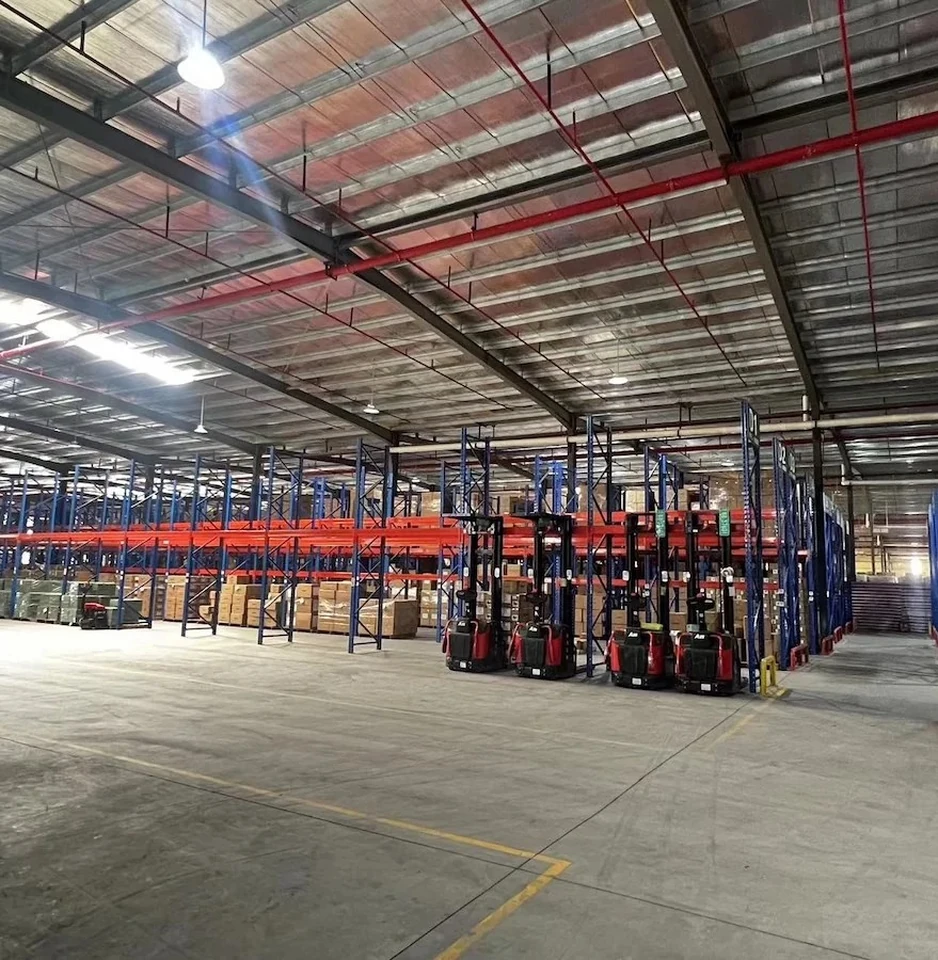
Shopify is an ecommerce storefront, not an international freight mode. A brand sourcing physical inventory from China may use ocean or air freight into a US third-party logistics warehouse, then fulfill retail orders domestically through whatever 3PL tools it contracts. This is different from shipping each consumer parcel directly from China to the buyer. Choosing the correct inventory path changes customs entry, cash flow, inventory control, receiving costs and delivery promises. This guide helps brand owners structure China-side consolidation, broker handoff and 3PL intake without assuming that DDP Atlas operates a Shopify fulfillment app or last-mile order service.
Translate sales forecast into freight release quantities
A Shopify brand should not book a shipment solely because a factory finished production. Combine historical unit sales, forecast lead time, promotion schedule, safety stock and 3PL capacity. Determine the weeks of stock needed at the destination and select a freight mode for the required reorder point. A split shipment may protect a launch but adds extra handling and entry costs. Define how many units per SKU must be physically available in the warehouse by the target date. If suppliers manufacture in different Chinese cities, build a shared cargo-ready calendar before deciding whether warehouse consolidation reduces total cost.
Establish an exact China supplier pickup and packing plan
Collect carton dimensions, actual gross weight, pieces by SKU, supplier purchase-order details, product origin and invoices. Decide which factory or consolidation warehouse will audit SKU labels, correct carton marks and prepare the master inventory manifest. Avoid labeling each carton simply “Shopify order.” The US warehouse needs its own receiving barcode or SKU mapping, not a website order reference. Where several factories contribute to one shipment, identify consolidation storage fees and relabeling labor. For value and origin declarations, collect primary supplier evidence rather than recreating invoice information after export.
Build customs and destination movement into the true price
The import process needs a properly identified importer of record, HTS classification, origin, valuation, broker and any relevant additional measures. The brand must distinguish delivery service terms from its legal customs obligations. Freight proposals should separate China origin charges, ocean or air, US clearance, port/CFS, drayage, appointments and 3PL receiving. The warehouse may impose per-carton fees, pallet handling, SKU setup, labeling or storage. Compare these on the same saleable unit basis. DDP Atlas's existing US FBA rate-card database is not automatically applicable to generic Shopify-to-3PL door deliveries.
Reconcile warehouse availability with the Shopify stock record
After the freight carrier delivers, the 3PL still needs to count cartons and post SKUs in its warehouse management system. Compare the ASN to physical receipt and make sure mapped SKUs match the storefront inventory identifiers. Record damaged goods, shorts, overs and any quarantine quantity separately. Inventory should not be promised as available online until the receiving system confirms usable stock. A mature replenishment KPI measures days from factory ready to sellable inventory, not only port-to-port transit. The forwarder and 3PL may have separate service obligations; document the custody handoff.

Turn Shopify demand into a freight release plan
A Shopify order forecast alone is not a replenishment plan. Work backward from the earliest date when inventory must be available in the U.S. 3PL WMS, subtract 3PL receiving time, inland trucking, customs/terminal uncertainty and international transit, then compare that target with the factory's production-ready date. Build separate base and surge assumptions. The decision is not “sea versus air” in the abstract; it is which SKUs must travel by which mode to protect stock availability without tying up unnecessary cash.
| Inventory field | Why it belongs in the shipping plan |
|---|---|
| SKU and current U.S. sellable stock | Establish real days of cover |
| Forecast daily sales | Estimate reorder point |
| Factory production-ready date | Prevent impossible sailing assumptions |
| Cartons, weight and dimensions | Obtain comparable air/sea quotes |
| U.S. 3PL inbound lead time | Define end of the replenishment schedule |
| Safety-stock trigger | Determine expedited split quantity |
Worked example: separate urgent units from base stock
A hypothetical brand sells 20 units daily of one SKU, has 600 sellable units remaining and expects future daily demand to remain at that level. Its simple stock cover is 30 days (600 ÷ 20), before allowances for variability or returns. A sea-freight route that reaches the port in 20 days but needs further clearance, delivery and receiving may miss the stock-availability target. Rather than airfreighting all future inventory, compare an urgent 300-unit tranche by air with the remaining factory output by sea. These figures demonstrate planning logic, not rates or guaranteed lead times. Actual carrier windows and warehouse readiness must be quoted.
China consolidation and carton identity
Where the Shopify brand uses multiple suppliers, assign one SKU master and carton labeling format before pickup. At a China consolidation warehouse, verify supplier quantities, condition and carton dimensions, then prepare one export manifest and receiving ASN. Record purchase-order revisions and barcode standards so the U.S. WMS can receive without unidentified stock. The importer should remain clear about customs ownership and the entity that can authorize entry.
Model cash conversion as well as freight spend
The comparison sheet should show goods paid to factories, freight deposits, clearance cash outflows, duty, domestic delivery, 3PL receipt charges and the date inventory becomes sellable. A lower freight quote that causes missed inventory availability can be financially worse. However, lost sales are forecasts, not recoverable carrier charges. Keep warehouse service fees separate from customs payments and supplier product cost, and never present a generic all-in rate as a binding quote.
For the warehouse-side handoff, use the companion U.S. 3PL receiving checklist.
Tie reorder quantity to the cost of an out-of-stock event
The simple formula inventory position ÷ forecast daily sales is useful only when the numerator includes sellable stock, confirmed inbound stock and committed orders consistently. For multiple Shopify variants, forecast at SKU or size level; a total of 3,000 units across all colors does not protect one popular variant from selling out. Add a service-level safety buffer based on demand variability, supplier production uncertainty and end-to-end replenishment lead-time variability. Review the buffer before each purchasing cycle instead of freezing the same days-of-cover policy throughout a season.
A practical split shipment can be decided by comparing the incremental air-freight cost of the urgent tranche against the forecast gross profit at risk during an expected stockout. The forecast is a management planning figure, not a claim against the carrier. Include the probability of stockout, not just maximum theoretical lost sales. The balance of stock can move by sea if it arrives in time for the next cycle, but the split increases carton-control and WMS reconciliation complexity and should be tracked separately.
A U.S. 3PL needs ecommerce-grade references
A generic exporter carton number may not be enough for order-fulfillment software. The brand should agree an ASN with the 3PL that connects purchase order, warehouse inbound appointment, merchant SKU, barcode, quantity and lot or batch where necessary. The consolidation facility in China can use this mapping when inspecting and merging multiple factory deliveries. Keep copies of the final carton labels and carton-content spreadsheet; the 3PL should return an accepted/short/damaged stock report with the same references. This reduces the lag between a delivery and the moment a Shopify order can actually be fulfilled.
Measure replenishment quality over several cycles
For each inbound shipment, record supplier ready-date variance, actual departure, terminal release, warehouse appointment, WMS receipt and first day of sellable inventory. Monitor landed freight cost per accepted unit alongside stockout days and warehouse exception fees. An airfreight shipment that saves the product launch may be justified even with a higher per-unit price; the same decision might be poor for slow-moving stock that will sit for months. This is why a meaningful quote asks about inventory demand as well as kilograms and cartons.
Shopify replenishment booking checklist
- Forecast demand and target stock-available date by SKU.
- Obtain factory packing data and consolidation costs.
- Validate importer and product customs classification.
- Get a US 3PL appointment, ASN and label specification.
- Compare international freight, brokerage and final-mile scopes.
- Reconcile warehouse WMS receipt with Shopify inventory.
Editable worksheet: Shopify Inventory Cost Model — an editable worksheet to collect verified inputs before you compare quotes. Illustrative inputs only; not a rate, duty or tax guarantee.
Frequently Asked Questions
Does Shopify arrange international freight for my inventory?
A Shopify storefront does not itself establish a freight arrangement; the merchant contracts logistics providers.
Can a 3PL receive a full container?
It depends on the warehouse dock and unloading capacity.
How should I measure shipping cost per unit?
Use all verified landed and receiving costs divided by saleable received units.
When should Shopify stock become available?
After the brand validates the 3PL received and correctly mapped the inventory.
Get a Shopify replenishment quote to your U.S. 3PL
Send your supplier pickup city, packed dimensions, target stock-arrival date, 3PL ZIP code and receiving guide. We can quote the inventory replenishment move and warehouse handoff instead of routing the request through an unrelated Amazon FBA workflow. Request Shopify stock shipping or see the China–USA route.
Related buyer guides
- Shipping from China to a US 3PL Warehouse: Port, Drayage and Receiving Costs
- China to USA 3PL Receiving Checklist: ASN, Carton Labels and Inventory Reconciliation
- Shopify DDP vs DAP Shipping: Import Duties, Checkout and Delivery Responsibilities
Primary references
Research verified October 16, 2026. Guidance describes general buyer planning, not a binding quote or a guarantee of regulatory treatment; confirm current requirements with the responsible authority and appointed specialist.
Part of the Shipping from China hub — see the wider freight planning map.