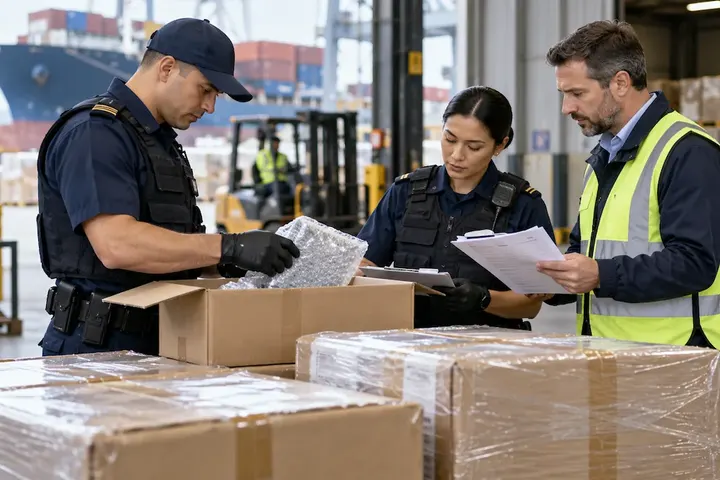
What an HS code is
The Harmonized Commodity Description and Coding System is maintained by the World Customs Organization. The international structure uses six-digit commodity codes. More than 200 countries and economies use the HS as the basis for customs tariffs and trade statistics.
However, the six-digit international HS is not always the final code used on an import declaration. Customs administrations commonly extend the code with additional digits for national tariff and statistical purposes.
That is why two statements can both be true:
- A supplier can give you a legitimate six-digit HS reference.
- Your destination country can still require a more detailed national tariff code and reach a different treatment based on product facts.
Start with the product, not the duty rate
A common classification mistake is searching for the lowest duty rate and then trying to make the product fit that heading.
A stronger process starts with objective facts:
- What is the product?
- What material is it made from?
- What is its principal function?
- Is it complete, unfinished, assembled or a part?
- How is it presented at import?
- Does it have multiple functions?
- Does the tariff contain a specific heading for the product?
For apparel, composition and garment type can matter. For machinery, function and whether the item is a complete machine or part can matter. For electronics, function, components and whether batteries are included can change both classification and transport requirements.
A six-step classification workflow
1. Write a customs-quality product description
Avoid descriptions such as “parts,” “accessories,” “plastic goods” or “electronics.”
A useful description should help another person understand what the product actually is without seeing the supplier catalog.
For example:
Weak: Metal parts
Better: Stainless-steel mounting brackets for commercial shelving, unassembled, with drilled fixing holes.
2. Collect technical facts
Build a classification folder with photographs, drawings, composition, function, dimensions, model details, manuals and bill of materials where relevant.
3. Identify candidate headings
Use the destination tariff schedule and the international HS structure to identify headings that plausibly describe the goods.
4. Apply the legal classification rules and notes
Classification should follow the tariff's legal wording, section/chapter notes and applicable interpretation rules—not just keyword similarity.
5. Resolve the national tariff digits
After the international six-digit level, determine the destination-specific tariff line used for the actual import.
6. Record the decision and evidence
For repeat products, keep the approved classification in product master data with the date, destination market and supporting rationale.
Supplier HS code vs importer HS code
Chinese suppliers often include an HS code on export documentation. That can be useful for export-side paperwork, but it should not be treated as the importer's final classification without review.
The importer should own the destination classification process because the importer bears the downstream consequences of an incorrect entry in many markets.
A practical master-data table looks like this:
| Field | Example purpose |
|---|---|
| SKU | Match purchasing and customs records |
| Product description | Clear customs description |
| Material/composition | Supports heading/subheading choice |
| Function/use | Helps distinguish similar headings |
| Supplier HS reference | Useful comparison point |
| Destination HS/tariff code | Code actually used for import planning |
| Duty rate | Landed-cost input |
| Ruling/reference | Evidence for difficult classifications |
| Review date | Ensures old assumptions are revisited |
HS codes and landed cost
Classification can change more than the base customs duty.
Depending on the market and product, the tariff code can influence:
- Normal customs duty
- Additional or trade-remedy duties
- Quotas
- Preferential tariff eligibility
- Anti-dumping/countervailing measures
- Licensing
- Product-agency requirements
- Statistical reporting
This is why a freight quote should not be confused with landed cost. Freight can be accurate while the customs-cost assumption is wrong.
Related guide: Landed Cost from China
When to request a binding or advance ruling
For high-value, high-volume or ambiguous products, importers may benefit from requesting a formal classification ruling or advance decision where the destination administration offers one.
This is particularly useful when:
- Several headings appear plausible
- A small classification change produces a large duty difference
- The product will be imported repeatedly
- The classification affects licensing or trade remedies
- Different brokers have given conflicting answers
A ruling is not necessary for every SKU, but the cost of uncertainty grows with shipment frequency and value.
Common classification mistakes
Using the supplier code without review
Useful as an input, not a complete compliance process.
Classifying by product name only
Commercial names can be too broad. Customs classification often depends on material, function and construction.
Ignoring product changes
A new material, battery configuration or function can invalidate an old classification.
Using one code for a mixed shipment
Different SKUs may require different codes even if the supplier sells them as one product family.
Treating an AI or web search result as a legal determination
Search tools can help narrow possibilities, but the final classification should be validated against the tariff and competent guidance.
HS code checklist before shipping from China
- Product description is specific
- Materials/composition confirmed
- Function and use documented
- Product images/specification retained
- Supplier code collected as a reference
- Destination tariff reviewed
- National tariff digits confirmed
- Duty and additional measures checked
- Product-agency requirements checked
- Classification stored in product master data
- Difficult cases escalated for ruling/advice
How this connects to freight planning
Classification should be ready before the cargo leaves China. If the code affects permits, dangerous-goods handling, trade remedies or duty cash flow, discovering the issue after arrival is already late.
DDP Atlas can coordinate China-side cargo data, supplier consolidation and freight planning while the importer or broker confirms the destination classification.
Frequently asked questions
Are HS codes the same worldwide?
The six-digit HS foundation is internationally harmonized, but countries add national tariff digits and may publish their own classification decisions.
Who is responsible for the HS code?
Responsibility depends on the legal system and transaction, but importers should not outsource judgment blindly. The party making the customs declaration needs a defensible classification.
Can two similar products have different HS codes?
Yes. Differences in material, function, construction, presentation or technical characteristics can change classification.
How often should classifications be reviewed?
Review when the product changes, the tariff is updated, a new market is added or a customs ruling/interpretation affects the product.
Official references for verification
- WCO Harmonized System FAQ: https://www.wcoomd.org/en/topics/nomenclature/overview/harmonized_system_faq.aspx?p=1
- WCO National Tariff directory: https://www.wcoomd.org/en/topics/nomenclature/resources/national-and-international-customs-tariff/national-tariff
Part of the Customs & Compliance hub — see the wider freight planning map.