What customs clearance actually means
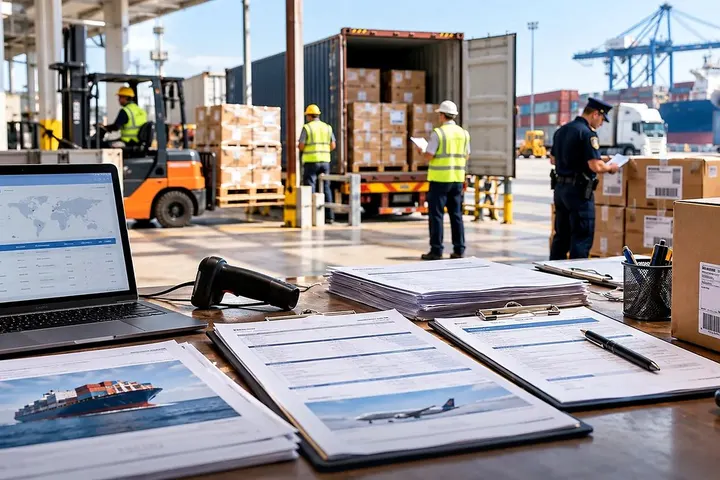
At a practical level, customs clearance is the process of presenting the required import data and documents to the destination customs authority, satisfying applicable regulatory requirements, paying or securing duties and taxes where required, and obtaining release so the cargo can continue to the consignee.
The exact sequence differs by country. Some markets require pre-arrival filings. Some products trigger food, medical, chemical, telecom, safety or other agency controls in addition to normal customs entry. The responsible importer may need a customs registration, tax number, bond, broker authorization or local representation before the shipment can be entered.
The important operational lesson is simple: the freight route and the customs route have to be designed together.
Step 1 — Confirm who will act as the importer
Before booking, identify the legal or commercial party that will act as the importer under the destination rules.
Do not assume that the buyer, seller, freight forwarder, customs broker and consignee are interchangeable. A broker may file an entry on behalf of an importer, but that does not automatically transfer the importer's legal responsibilities. Likewise, a DDP commercial arrangement does not remove the need to confirm who can legally import, account for taxes and satisfy product requirements in the destination country.
For U.S. imports, CBP identifies the importer of record through the entry process and importer number system. Other markets use different registration structures. If the shipment is moving under a DDP or other door-to-door arrangement, confirm the importer/tax structure as part of the route review rather than treating it as a last-mile detail.
Useful internal link: DDP Shipping from China
Step 2 — Classify the goods correctly
Customs authorities use tariff classifications to determine duty treatment, statistical reporting and, in many cases, whether additional controls apply.
The international Harmonized System provides a six-digit foundation, but countries extend that structure through their own national tariff schedules. That means a supplier's six-digit HS suggestion can be a useful starting point, but it should not automatically be treated as the final import classification.
For each product, keep a controlled classification file containing:
- Clear product description
- Materials and composition
- Primary function and use
- Technical specifications where relevant
- Model/SKU references
- Country of origin
- Proposed HS classification
- Supporting classification notes or rulings where appropriate
- Destination-specific tariff code used for the actual entry
A stable product-classification database is especially valuable for repeat imports because it prevents each shipment from starting from zero.
Related guide: HS Codes for Imports from China
Step 3 — Confirm customs value
Customs value is not simply whatever number is convenient for the shipment.
The declared value should be based on the applicable valuation rules and supported by the commercial transaction. Purchase price, assists, royalties, packing and other additions can matter depending on the country and transaction. Freight and insurance treatment also differs by customs system and valuation basis.
The commercial invoice should therefore be consistent with purchase records and should not be created as an isolated logistics document after the goods are packed.
Avoid common high-risk practices such as:
- Artificially reducing invoice value to lower duty
- Declaring a sample value that is unrelated to the commercial transaction
- Using different values on the invoice, purchase order and customs instructions without explanation
- Leaving product values blank for multi-SKU shipments
For repeat imports, ask the finance and compliance teams to agree on a valuation workflow before the first shipment.
Step 4 — Prepare the core document set
Most commercial imports will require a combination of commercial, transport and customs information. The exact set varies, but the core working file usually includes:
| Document / data | Operational purpose |
|---|---|
| Commercial invoice | Seller, buyer, goods, quantity, value, currency and transaction information |
| Packing list | Cartons/pallets, weights, dimensions and packing structure |
| Bill of lading / sea waybill / air waybill | Transport and routing record |
| HS classification data | Supports customs classification and duty treatment |
| Origin information | Supports origin declaration and applicable trade measures |
| Importer and broker details | Enables entry and customs communication |
| Product certificates or permits | Required where the commodity is regulated |
| Insurance / claim records | Relevant where cargo insurance is purchased or a claim occurs |
The biggest practical risk is inconsistency. If the packing list says 82 cartons, the final transport record says 79 and the warehouse actually received 84, the discrepancy needs to be resolved—not hidden.
Related guide: International Shipping Documents Checklist
Step 5 — Review product-specific import controls
Customs release and product compliance are not the same thing.
A shipment can have correct freight documents and still be stopped because the product requires an additional permit, registration, conformity document, test report or agency filing. Examples can include food, cosmetics, medical products, chemicals, batteries, wireless equipment, children's products and plant/animal materials.
Before departure, ask four questions:
- Is this product restricted or regulated in the destination market?
- Does the importer need a license, registration or special number?
- Does the product require certificates, testing or labeling before import?
- Does the packaging itself create requirements, such as ISPM 15 for certain raw-wood packaging?
The earlier these questions are answered, the more route choices remain available.
Step 6 — File pre-arrival data where required
Many markets require security or customs data before vessel or aircraft arrival, and some require information before loading or departure.
The party responsible for filing must have the correct data early enough to meet the deadline. Waiting for the vessel arrival notice to start collecting supplier information can be too late.
Create a pre-departure checkpoint that confirms:
- Importer and consignee details
- Supplier/exporter details
- Commodity description
- Classification
- Value and currency
- Country of origin
- Package count and weight
- Transport document data
- Any required security filing data
Step 7 — Plan duties, taxes and customs cash flow
Customs release may depend on payment, a customs account, deferred-payment arrangement, bond or other security mechanism.
For landed-cost planning, separate:
Product cost + origin handling + international freight + insurance + customs duty + import tax/VAT/GST + broker/clearance charges + destination handling + final delivery.
This makes it easier to distinguish a freight-rate change from a tariff or tax change.
Related guide: Landed Cost from China
Step 8 — Respond quickly to customs questions
A customs query does not automatically mean something is wrong. Authorities may request supporting information, inspect cargo or verify classification/value/origin.
The operational objective is to have a response package ready. Maintain:
- Purchase order and payment support
- Product specification sheets
- Supplier/manufacturer details
- Product photographs
- Classification support
- Certificates or test reports
- Freight and insurance evidence where relevant
- Broker contact and escalation owner
Slow response creates more cost than the original question in many cases because storage, demurrage, delivery appointments and inventory deadlines continue moving.
A practical pre-shipment customs checklist
- Importer structure confirmed
- Customs broker appointed if required
- Product descriptions are specific
- HS classifications reviewed for destination
- Commercial values supported
- Origin confirmed
- Invoice and packing list agree
- Product compliance requirements reviewed
- Wood packaging / battery / DG status confirmed where relevant
- Pre-arrival filing responsibilities assigned
- Duties/taxes/security method planned
- Delivery address and receiving requirements confirmed
When a China-side freight partner helps
Customs clearance becomes easier when origin cargo data is reliable. DDP Atlas can coordinate supplier pickup, warehouse receiving, carton count, weight and dimension confirmation, consolidation, freight booking and the agreed customs/destination workflow so the documents are based on the shipment that actually moves.
Get a Freight Estimate or review freight services from China.
Document audit matrix: check every field before the entry is filed
Most customs delays are document defects, not enforcement actions. Run this audit before the shipment arrives, and record who verified each line.
| Document or data point | What must be consistent | Verified by |
|---|---|---|
| Commercial invoice | Seller, buyer, description, quantity, unit value, total value, currency and terms | |
| Packing list | Carton count, contents per carton, gross and net weight, dimensions | |
| Transport document | Consignee, notify party, port pair, marks and numbers matching the cartons | |
| HS classification | The code used, the basis for it, and consistency with the invoice description | |
| Customs value | Which charges are included in the declared value, and the basis for any adjustment | |
| Origin information | Where the goods were produced, and any preferential treatment claimed | |
| Import licences and permits | Whether the commodity requires an authorisation at destination, and who holds it | |
| Importer of record and broker authority | Who files the entry, and the written authority to act | |
| Product compliance evidence | Standards, labelling or conformity documents the destination requires |
Two rules apply to all of the above. First, the description on the invoice must describe the goods as they actually are — not as a simplified category that attracts a different treatment. Second, where two documents disagree, the discrepancy is resolved before the entry is filed, not after.
Hold and inspection: what happens, who does what
An examination or a query is a process, not a failure. Knowing the flow in advance is what keeps it short.
| Stage | Who is involved | What to do |
|---|---|---|
| Authority raises a query or selects the shipment for examination | Authority, broker | The broker notifies the importer; establish exactly what is being asked before responding |
| Data reconciliation | Importer, broker, sometimes the supplier | Reconcile invoice, packing list, classification and value; correct the entry where it is wrong |
| Physical examination | Authority, terminal, sometimes the broker | Attend or authorise attendance; record what was inspected and any findings |
| Costs accrue | Terminal, carrier, broker | Storage, examination and attendance fees may arise; ask for these in writing as they are incurred |
| Release | Authority, broker | Confirm release before arranging collection; do not assume the free-time clock has paused |
| Review | Importer | Record the cause and fix the upstream process so it does not repeat |
Two things cannot be guaranteed by any freight provider: that a shipment will not be selected for examination, and how long an examination will take. What can be controlled is how fast the required data is produced and how accurately the entry was prepared in the first place.
This page describes the process in general terms. It is not legal, tariff or tax advice, and the requirements that apply to your goods are set by the destination authority.
Frequently asked questions
Can a freight forwarder clear customs for me?
A freight forwarder may coordinate with a customs broker or clearance provider, depending on the market and service scope. Confirm who is legally authorized to file the entry and who remains responsible as importer.
Is an HS code from my Chinese supplier enough?
Treat it as a reference, not automatic proof of the final destination-country classification. The importer should verify the code against the destination tariff and product facts.
Does DDP mean I do not need to think about customs?
No. DDP describes a commercial responsibility structure, but importer, tax, compliance and route eligibility still need to be workable in the destination market.
Why do customs delays happen even when the freight arrived on time?
Common causes include incomplete importer setup, inconsistent documents, classification questions, valuation review, regulatory holds and slow response to customs requests.
Official references for verification
- World Customs Organization — Harmonized System: https://www.wcoomd.org/en/topics/nomenclature/overview/what-is-the-harmonized-system.aspx
- U.S. CBP — Commercial invoice requirements: https://www.help.cbp.gov/s/article/Article-1175?language=en_US
- U.S. CBP — Formal entry guidance: https://www.help.cbp.gov/s/article/Article-1073?language=en_US
Get the entry data right before the cargo lands
Customs is decided by the data that is filed, not by the freight mode. Audit the documents, fix the classification and value basis, and confirm who is authorised to file before the shipment arrives.
Review Customs Information Before Booking Talk to a Freight Expert
Continue with: customs compliance hub · Incoterm responsibility comparison · DDP shipping services.
Rates, transit times and customs treatment are confirmed per shipment and per destination. Planning estimates on this site are not binding freight quotes.
Part of the Customs & Compliance hub — see the wider freight planning map.